
Photo Gallery
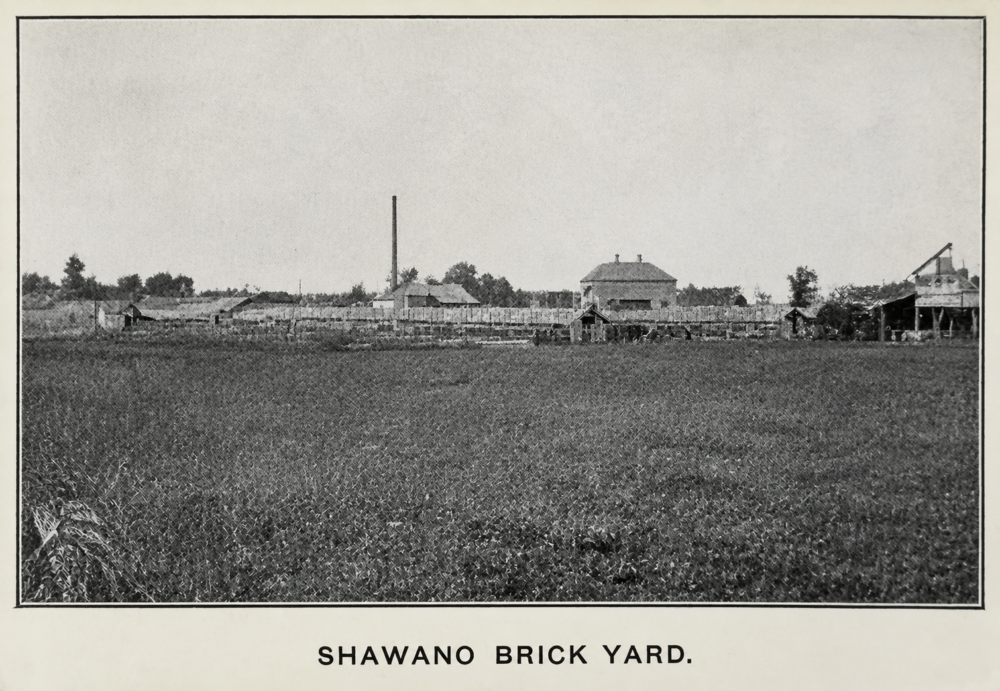
Larson Brickyard in the 1950’s.
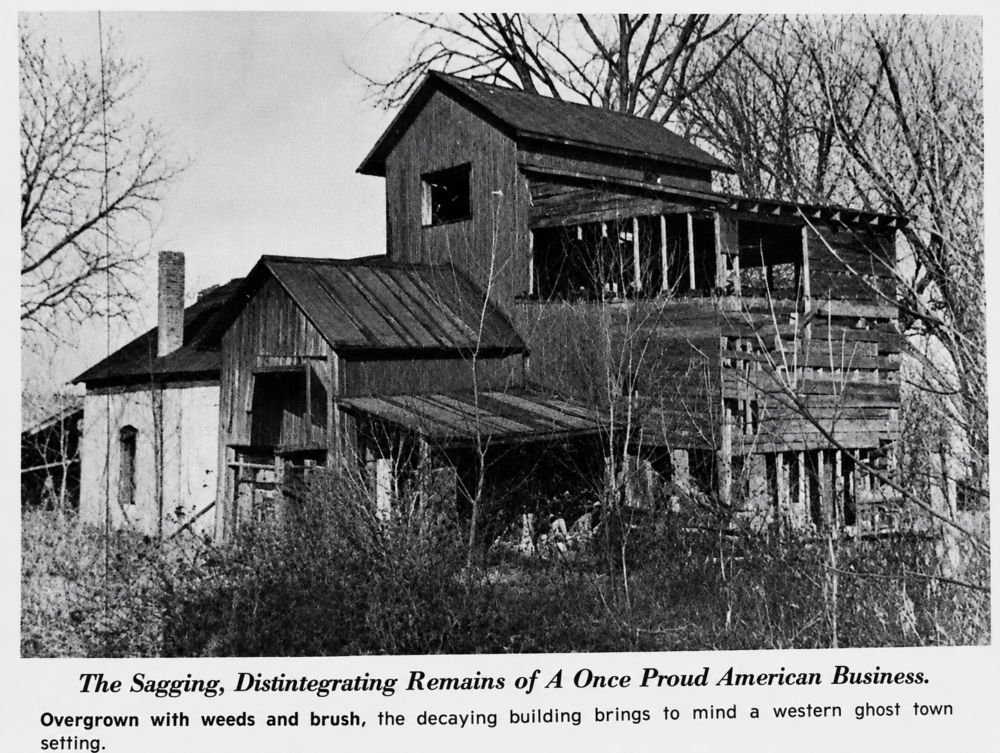
Larson Brickyard in the 1950’s.
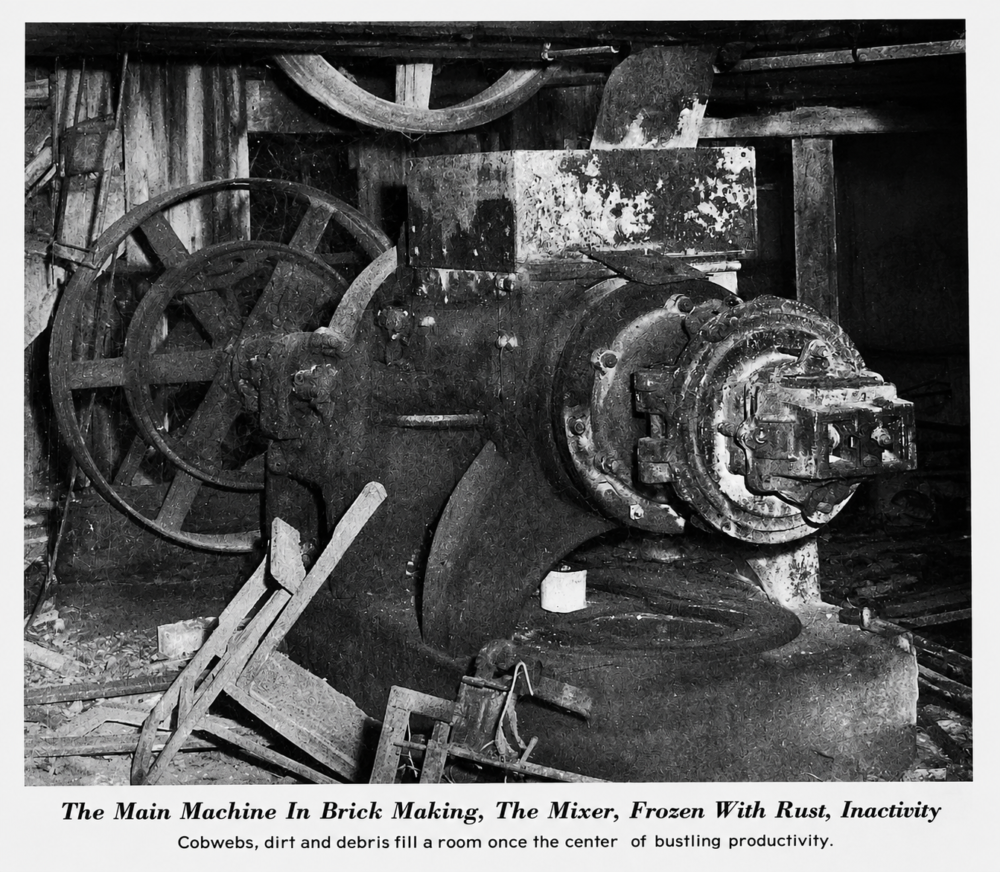
Larson Brickyard in the 1950’s.
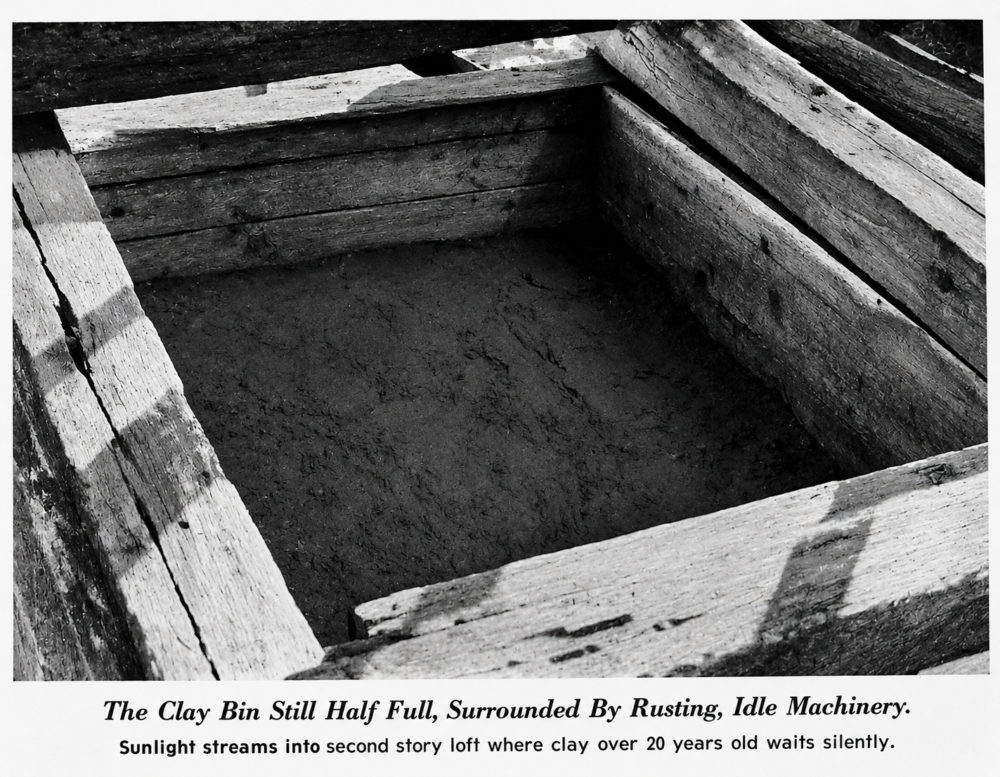
Larson Brickyard in the 1950’s.
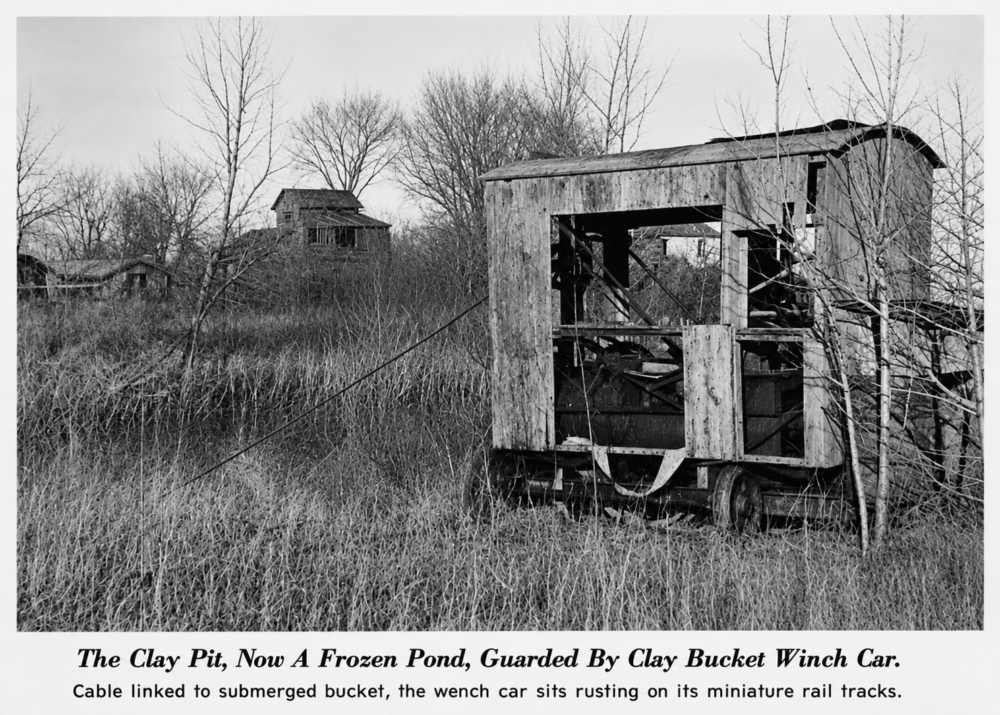
Larson Brickyard in the 1950’s.
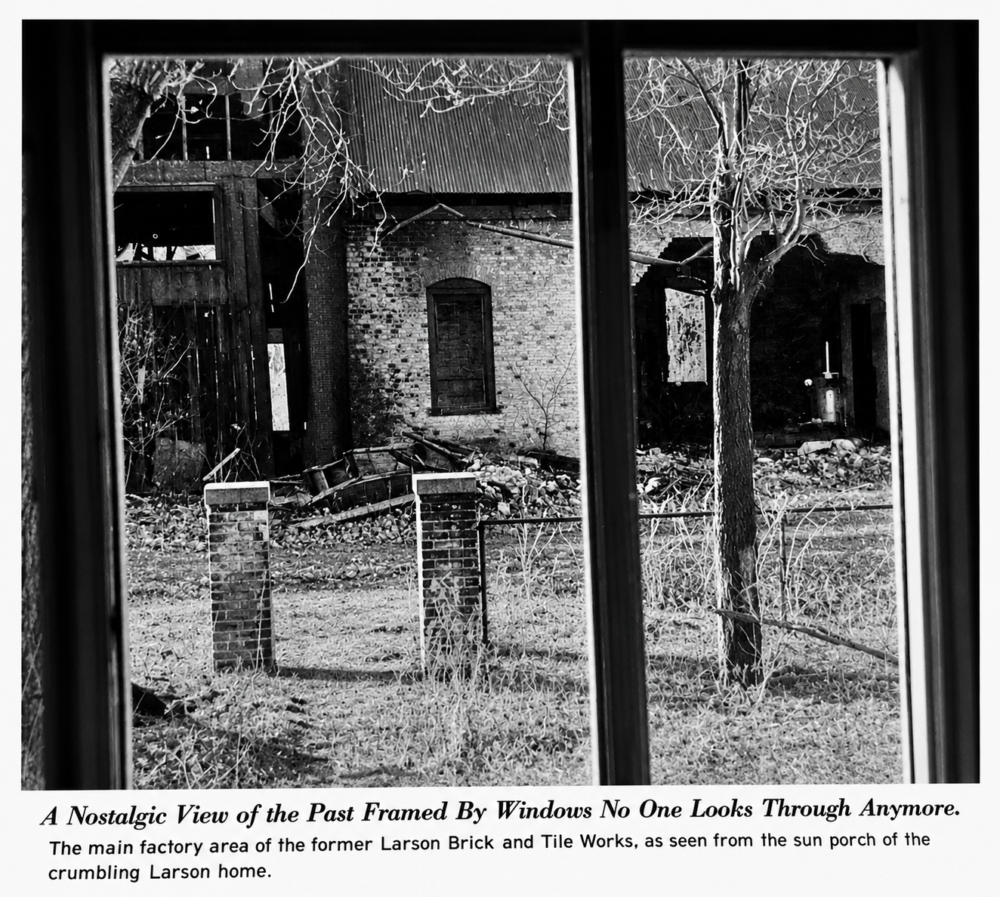
Larson Brickyard in the 1950’s.
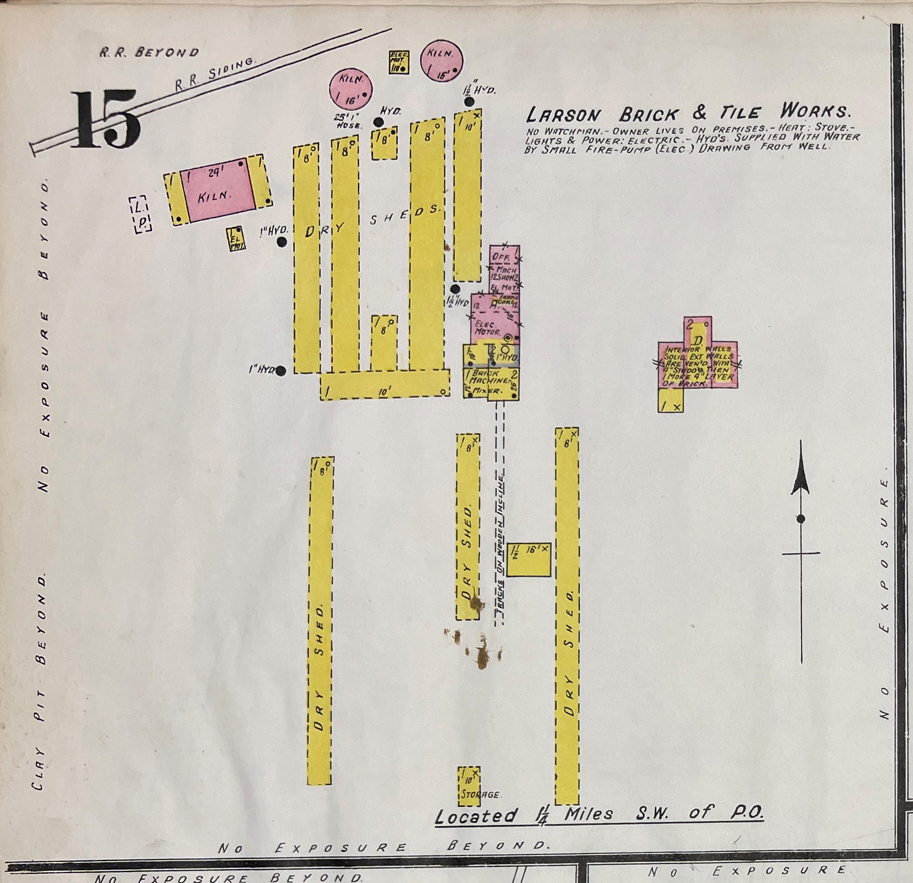
1926 Sanborn Fire Map showing the Larson Brick Yard.
Notes
The Larson Brickyard
Shawano, WI
The Larson Brick Yard – Shawano Evening Leader
Early Shawano Business Site To Be Razed After 82 Years
Wind rustling through shoulder-high grass and the dry creek of weathered boards hanging precariously from rusting nails, are the fading echoes of a once thriving Shawano County business, soon to be erased from view forever.
Few people are left that remember the bustling activity of the Larson Brick and Tile Works, just west of the city near the Shawano Paper Mills. It stands today, a disintegrating monument of rotting lumber, rusting machinery, crumbling bricks—a mere skeleton of a major industry contributing heavily to the history of Shawano.
Tracing its beginnings to the year 1890 when Charles Larson moved his small farm-based part-time brick business to the clay pit near the Wolf River, the yard suffered a lingering death, beginning in 1946, when high production costs forced it to shut down operation.
WHAT IS LEFT of an imposing wooden and brick factory building and what was once an impressive brick mansion reaching landmark status, now faces the blade of the bulldozer. Man’s modern-day know-how shall forever wipe from view that portion of the past which could not adapt to the burgeoning needs of a growing country.
The property has been purchased by the Shawano Paper Mills, Inc., and clearing of the land will begin in the near future, removing the buildings which have become an eyesore and a hazard.
Not many people are aware that the brickyard was once one of the leading factories in this community and, before the war, produced by the multiple thousands baked clay building bricks which played an important part in building this country.
The facts are interesting, if not a bit startling, about the amount of production which came out of the plant. At its peak, the works was capable of producing from 13,000 to 15,000 bricks per day. A 23-man work force was required to operate it at this time.
WHEN IN operation, there was a huge 100,000-brick-capacity kiln and two smaller round kilns which held 35,000 bricks each.
The actual operation of the yard was only during the late spring through late fall and was curtailed by heavy frost and snow during the winter.
The brickyard reached its peak under the guidance of Larson’s son Tom, who took over the business in 1905. Young Tom grew up in the brick-making business and when the yard ceased to operate, 56 years of brick and tile know-how had been accumulated.
Making the brick was an involved operation beginning with extracting the raw material from the clay pit, now a large water-filled pond located some distance from the factory.
An intricate system of cables and a miniature rail network was utilized, remnants of which can still be found overgrown with 26 years of weeds, brush and debris. Buckets of clay were drawn up a trestle to the second-story clay bin which fed the mixer. When the clay was mashed to a proper consistency, it was fed into molds and then cut into standard brick lengths. The embryo bricks were stacked in sheds until dried to a whitish color, ready to be placed in the kilns.
WHEN THE BURN time arrived, the bricks were repiled into the kilns leaving a little space between each to create a draft. A small fire was started to drive out the remaining moisture and then the big coal-fed fires were kindled.
Bricks were heated at temperatures of over 2600 degrees Fahrenheit until they became white hot, causing the clay to fuse into a usable building brick. The burning took five days.
The kilns were then sealed airtight and the bricks allowed to cool gradually for another three to four days.
Not much is left of the complicated equipment, much of which young Tom Larson designed and maintained by himself. Almost to the day of his death in 1956, Larson made regular trips to the yard from his home in town to care for the machinery which sat idle since 1946.
Neighbors and residents commented they often would see the tall, slightly stoop-shouldered owner moving through the vacant brick house, or checking the empty kilns, passing ghost-like through the deserted, still factory. The machinery was always ready, waiting.
THE LARSON home, next to the factory, was a massive building made almost entirely of brick. The outer shell of the large two-story mansion-like home was built of four layers of brick. It was designed to endure the ravages of time, but after his death, succumbed to the vandals’ sense of fun and adventure.
The war changed a lot of things for the world and the Larson firm was soon affected by increased operation costs that swept postwar American business.
Larson, in an interview in 1952, claimed that production costs increased six times, while prices increased only two. The factory was closed and the owner began his lonely vigil over idled machinery, waiting for an economic change that would never come.
THE DEATH of a business is not a rare occurrence anymore, so the passing of one so little known, so many years ago, has little effect on us today, who hurry ever faster going to the moon.
It does provide us with a glimpse into a rich past, where free enterprise and hard work was an honorable profession paving the way to our present life of ease, comfort and studied indifference.
The last piece of a monument one man built to himself will soon disappear, mostly without notice, but the mark of his pioneering spirit will hopefully linger awhile longer with us. That, at least, we owe him.
Charles Larsen
Mr. Larsen has a brick yard just outside the city limits of Shawano and has been established there eleven years. It is quite a large brick yard. He employs from sixteen to twenty men, makes wire cut brick, and has very good clay and about twelve dry sheds. It is a very desirable plant. Three years ago, Mr. Larsen had the plant remodeled and changed from hand to machinery. He has now the latest improved machinery and is well equipped for the making of brick. His trade is mostly home trade and he is kept busy all the time.
Mr. Larsen was born in Denmark in 1850. He came to this country in 1870, lived in New York two years, then moved to Hartland and from there to Shawano.
The brick from his yard is classed among the best brick made and it is so good that he is kept constantly running to the full capacity of his plant.
Mr. Larsen had made a long study of the art of brick making and knows every detail in that line; therefore, the brick that is turned out from his yard has no superior.
Thomas Larson, Charles son, was much more than a brick manufacturer. Contemporary accounts described him as an inventor who developed an improved brick-making machine, and by 1913 his brick works was considered one of Shawano’s leading industries.