Online Edition
Pages
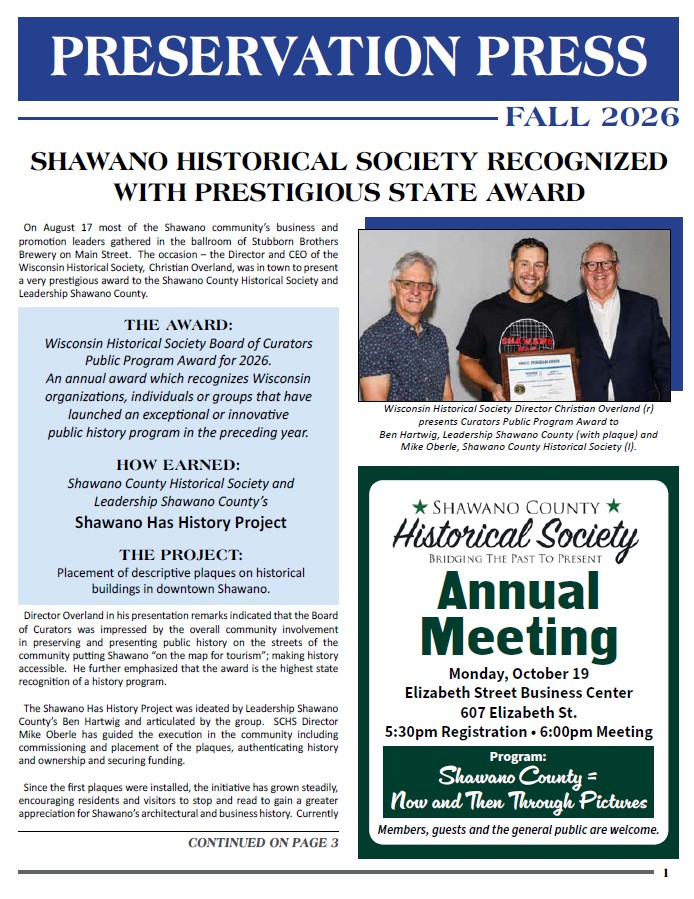
Preservation Press Fall 2026 page 1.
Preservation Press Fall 2026 page 2.
Preservation Press Fall 2026 page 3.
Preservation Press Fall 2026 page 4.
Preservation Press Fall 2026 page 5.
Preservation Press Fall 2026 page 6.
Preservation Press Fall 2026 page 7.
Preservation Press Fall 2026 page 8.
Preservation Press Fall 2026 page 9.
Preservation Press Fall 2026 page 10.
Preservation Press Fall 2026 page 11.
Preservation Press Fall 2026 page 12.
Preservation Press Fall 2026
Shawano Historical Society Recognized With Prestigious State Award
On August 17 most of the Shawano community’s business and promotion leaders gathered in the ballroom of Stubborn Brothers Brewery on Main Street. The occasion – the Director and CEO of the Wisconsin Historical Society, Christian Overland, was in town to present a very prestigious award to the Shawano County Historical Society and Leadership Shawano County.
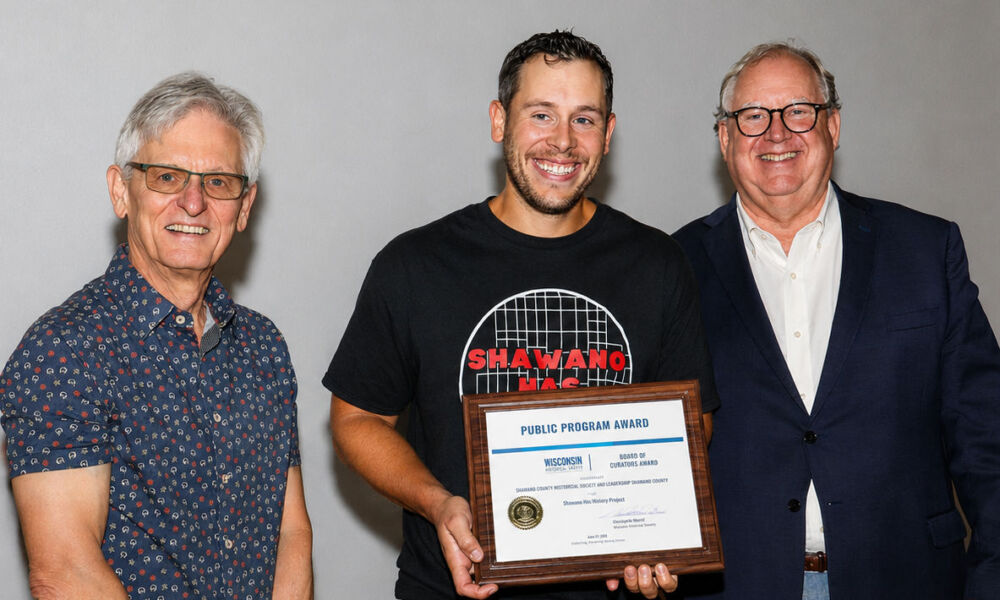
Wisconsin Historical Society Director Christian Overland (r) presents Curators Public Program Award to Ben Hartwig, Leadership Shawano County (with plaque) and Mike Oberle, Shawano County Historical Society (l).
The Award:
Wisconsin Historical Society Board of Curators Public Program Award for 2026.
An annual award which recognizes Wisconsin organizations, individuals or
groups that have launched an exceptional or innovative public history
program in the preceding year.
How Earned:
Shawano County Historical Society and Leadership Shawano County’s
Shawano Has History Project.
THE PROJECT:
Placement of descriptive plaques on historical buildings in downtown Shawano.
Director Overland in his presentation remarks indicated that the Board of Curators was impressed by the overall community involvement in preserving and presenting public history on the streets of the community putting Shawano “on the map for tourism”; making history accessible. He further emphasized that the award is the highest state recognition of a history program.
The Shawano Has History Project was ideated by Leadership Shawano County’s Ben Hartwig and articulated by the group. SCHS Director Mike Oberle has guided the execution in the community including commissioning and placement of the plaques, authenticating history and ownership and securing funding.
Since the first plaques were installed, the initiative has grown steadily, encouraging residents and visitors to stop and read to gain a greater appreciation for Shawano’s architectural and business history. Currently there are 20 plaques which include old photos and abridged history of the structure, its owners and the business conducted. Each plaque includes a QR code linking to additional photographs and information through SCHS’s website: www.shawanohistory.org. In effect, the plaques and deeper access create a self-guided walking tour that allows people to explore downtown while learning about the history that helped shaped the community in the 19th and 20th Centuries.
Oberle and Hartwig offered at the presentation that, while their respective organizations have carried out the project, many individuals, civic and governmental agencies and associations have been critical to the programs success. Additional buildings are being researched, new plaques are planned, and the project hopes to expand throughout Shawano County, ensuring that more stories will be preserved and shared with future generations. Link to “Historic Properties – Shawano Has History” at the Society’s website for more information.
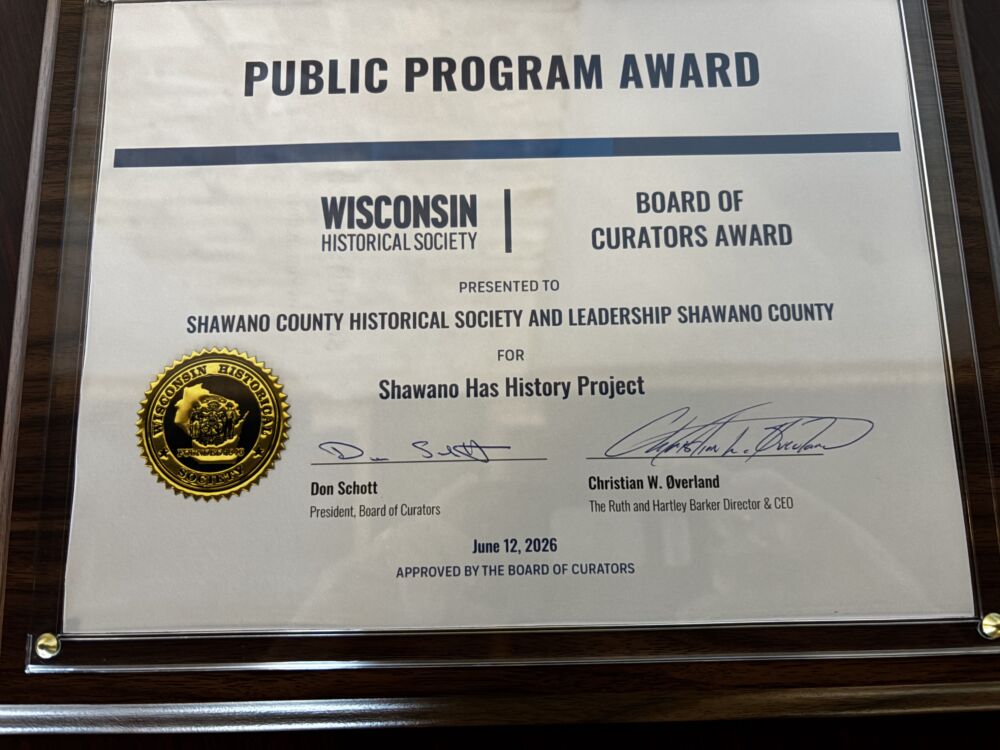
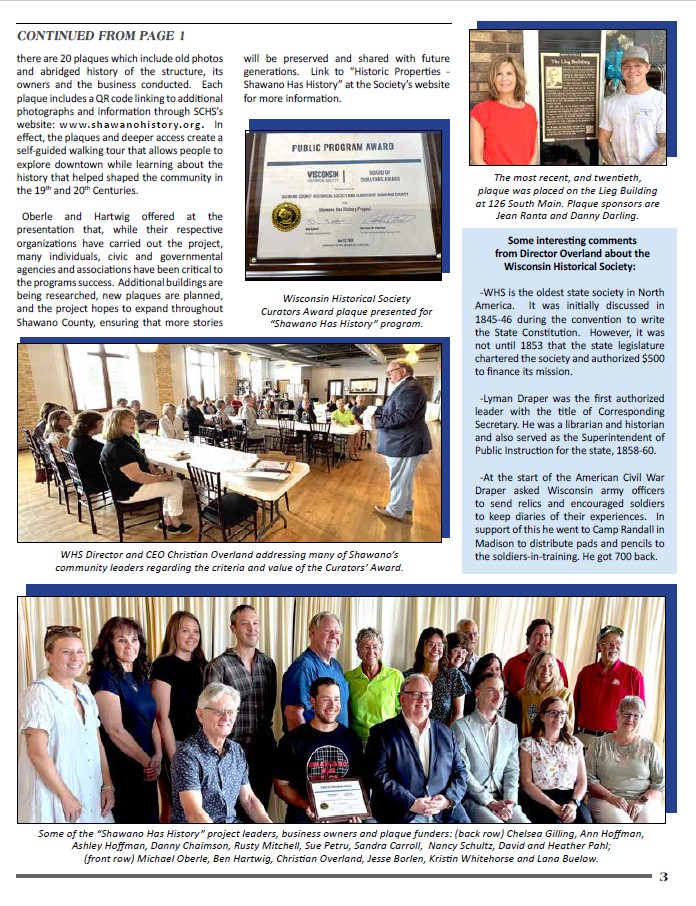
Wisconsin Historical Society Curators Award plaque presented for “Shawano Has History” program.
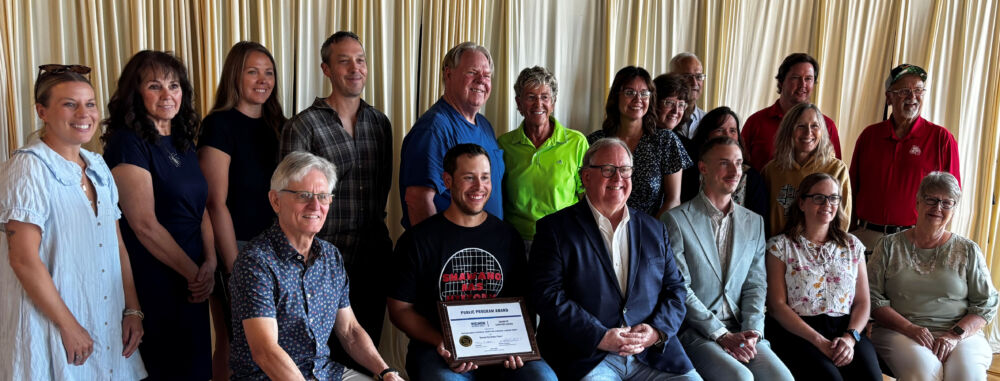
Some of the “Shawano Has History” project leaders, business owners and plaque funders: (back row) Chelsea Gilling, Ann Hoffman, Ashley Hoffman, Danny Chaimson, Rusty Mitchell, Sue Peru, Sandra Carroll, Nancy Schultz, David and Heather Pahl. (front row) Michael Oberle, Ben Hartwig, Christian Overland, Jesse Borlen, Kristin Whitehorse and Lana Buelow.
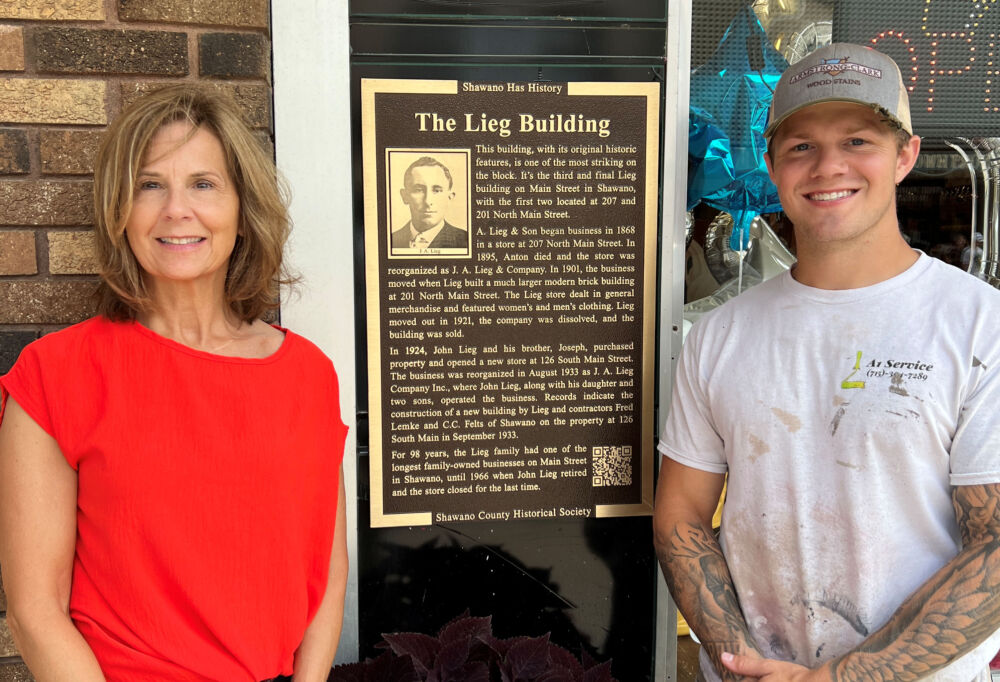
The most recent, and twentieth, plaque was placed on the Lieg Building at 126 South Main. Plaque sponsors are Jean Ranta and Danny Darling.
Some interesting comments from Director Overland about the Wisconsin Historical Society:
-
- WHS is the oldest state society in North America. It was initially discussed in 1845-46
during the convention to write the State Constitution. However, it was not until 1853
that the state legislature chartered the society and authorized $500 to finance its
mission. - Lyman Draper was the first authorized leader with the title of Corresponding Secretary.
He was a librarian and historian and also served as the Superintendent of Public
Instruction for the state, 1858-60. - At the start of the American Civil War Draper asked Wisconsin army officers to send
relics and encouraged soldiers to keep diaries of their experiences. In support of
this he went to Camp Randall in Madison to distribute pads and pencils to the
soldiers-in-training. He got 700 back.
- WHS is the oldest state society in North America. It was initially discussed in 1845-46
****************
Annual Meeting
Monday, October 19, 2026
Elizabeth Street Business Complex
607 E. Elizabeth Street
Shawano, WI
5:30 PM Registration
6:00 PM Meeting Begins
Members, guests, and the general public are welcome!
****************
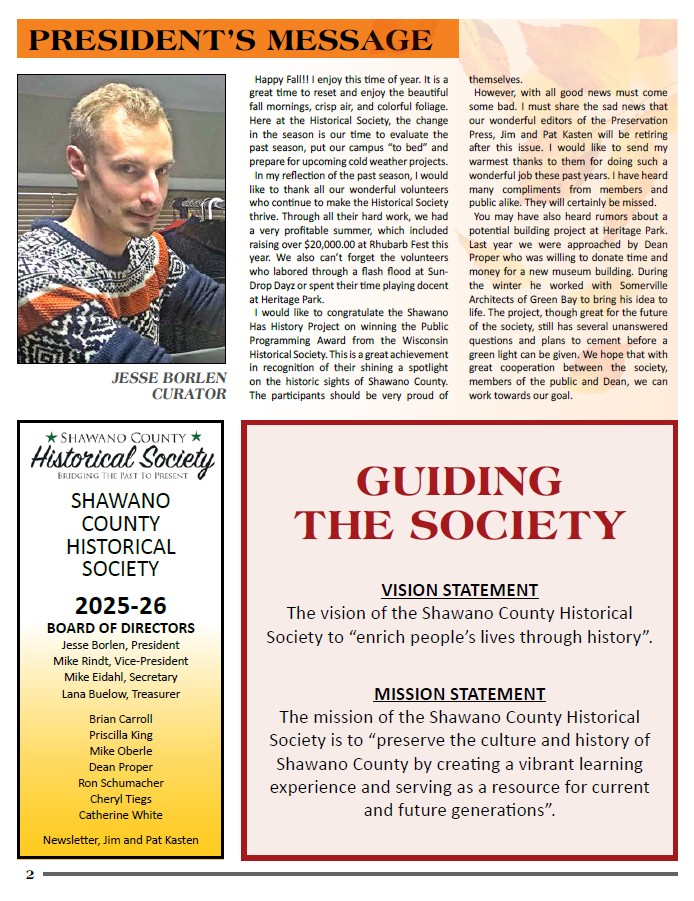
PRESIDENT’S MESSAGE – JESSE BORLAN

Jesse Borlen President and Curator
In my reflection of the past season, I would like to thank all our wonderful volunteers who continue to make the Historical Society thrive. Through all their hard work, we had a very profitable summer, which included raising over $20,000.00 at Rhubarb Fest this year. We also can’t forget the volunteers who labored through a flash flood at Sun-Drop Dayz or spent their time playing docent at Heritage Park.
I would like to congratulate the Shawano Has History Project on winning the Public Programming Award from the Wisconsin Historical Society. This is a great achievement in recognition of their shining a spotlight on the historic sights of Shawano County. The participants should be very proud of themselves.
However, with all good news must come some bad. I must share the sad news that our wonderful editors of the Preservation Press, Jim and Pat Kasten will be retiring after this issue. I would like to send my warmest thanks to them for doing such a wonderful job these past years. I have heard many compliments from members and public alike. They will certainly be missed.
You may have also heard rumors about a potential building project at Heritage Park. Last year we were approached by Dean Proper who was willing to donate time and money for a new museum building. During the winter he worked with Somerville Architects of Green Bay to bring his idea to life. The project, though great for the future of the society, still has several unanswered questions and plans to cement before a green light can be given. We hope that with great cooperation between the society, members of the public and Dean, we can work towards our goal.
****************
GUIDING THE SOCIETY
VISION STATEMENT
The vision of the the Shawano County Historical Society to “enrich people’s lives through history.”
MISSION STATEMENT
The mission of the the Shawano County Historical Society is to “preserve the culture and history or Shawano County by creating a vibrant learning experience and serving as a resource for current and future generations”.
*****************
SHAWANO COUNTY HISTORICAL SOCIETY
2025-26 BOARD OF DIRECTORS
Jesse Borlen, President
Mike Rindt, Vice-President
Mike Eidahl, Secretary
Lana Buelow, Treasurer
Brian Carroll
Priscilla King
Mike Oberle
Dean Proper
Ron Schumacher
Cheryl Tiegs
Catherine White
Newsletter, Jim and Pat Kasten
*****************
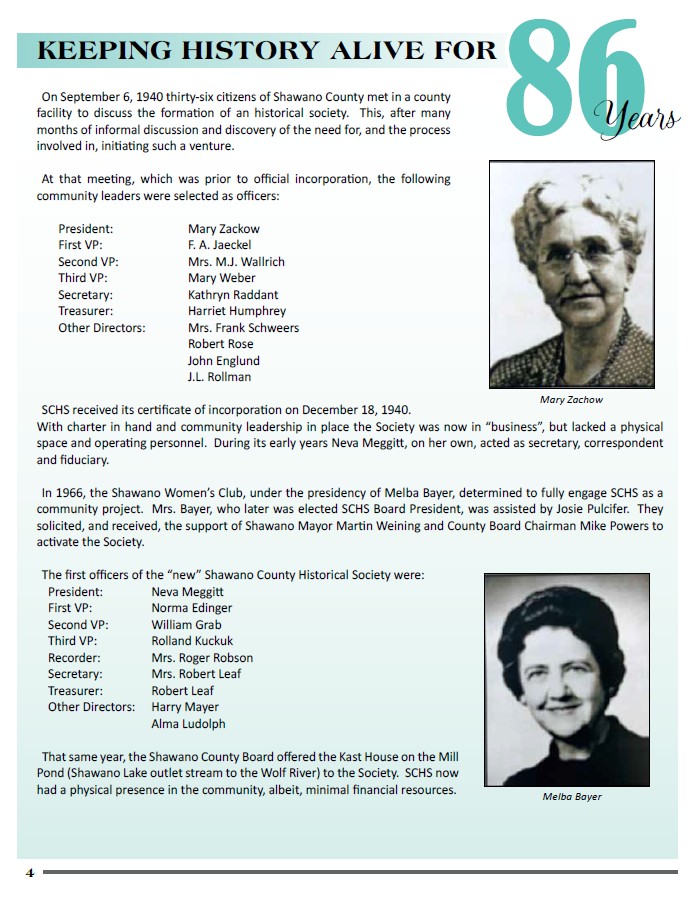
KEEPING HISTORY ALIVE FOR 86 YEARS
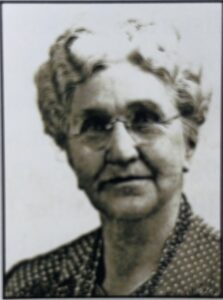
Mary Zachow
On September 6, 1940 thirty-six citizens of Shawano County met in a county facility to discuss the formation of an historical society. This, after many months of informal discussion and discovery of the need for, and the process involved in, initiating such a venture.
At that meeting, which was prior to official incorporation, the following community leaders were selected as officers:
President: Mary Zackow
First VP: F. A. Jaeckel
Second VP: Mrs. M.J. Wallrich
Third VP: Mary Weber
Secretary: Kathryn Raddant
Treasurer: Harriet Humphrey
Other Directors: Mrs. Frank Schweers, Robert Rose, John Englund, J.L. Rollman
SCHS received its certificate of incorporation on December 18, 1940. With charter in hand and community leadership in place the Society was now in “business”, but lacked a physical space and operating personnel. During its early years Neva Meggitt, on her own, acted as secretary, correspondent and fiduciary.
In 1966, the Shawano Women’s Club, under the presidency of Melba Bayer, determined to fully engage SCHS as a community project. Mrs. Bayer, who later was elected SCHS Board President, was assisted by Josie Pulcifer. They solicited, and received, the support of Shawano Mayor Martin Weining and County Board Chairman Mike Powers to activate the Society.
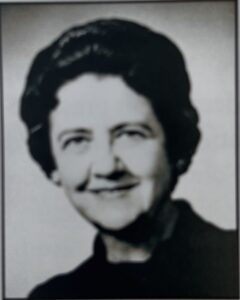
Melba Bayer
The first officers of the “new” Shawano County Historical Society were:
President: Neva Meggitt
First VP: Norma Edinger
Second VP: William Grab
Third VP: Rolland Kuckuk
Recorder: Mrs. Roger Robson
Secretary: Mrs. Robert Leaf
Treasurer: Robert Leaf
Other Directors: Harry Mayer, Alma Ludolph
That same year, the Shawano County Board offered the Kast House on the Mill Pond (Shawano Lake outlet stream to the Wolf River) to the Society. SCHS now had a physical presence in the community, albeit, minimal financial resources.
*****************
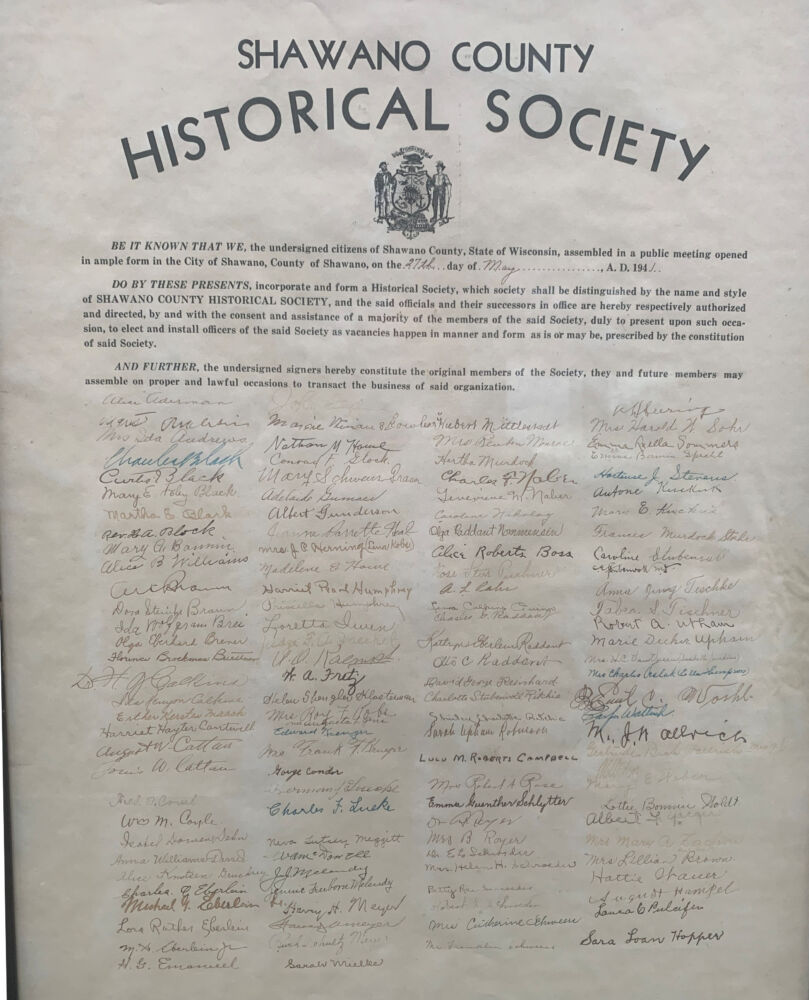
The original Shawano County Historical Society charter document signed by a literal “who’s who” of Shawano in the 1940s.
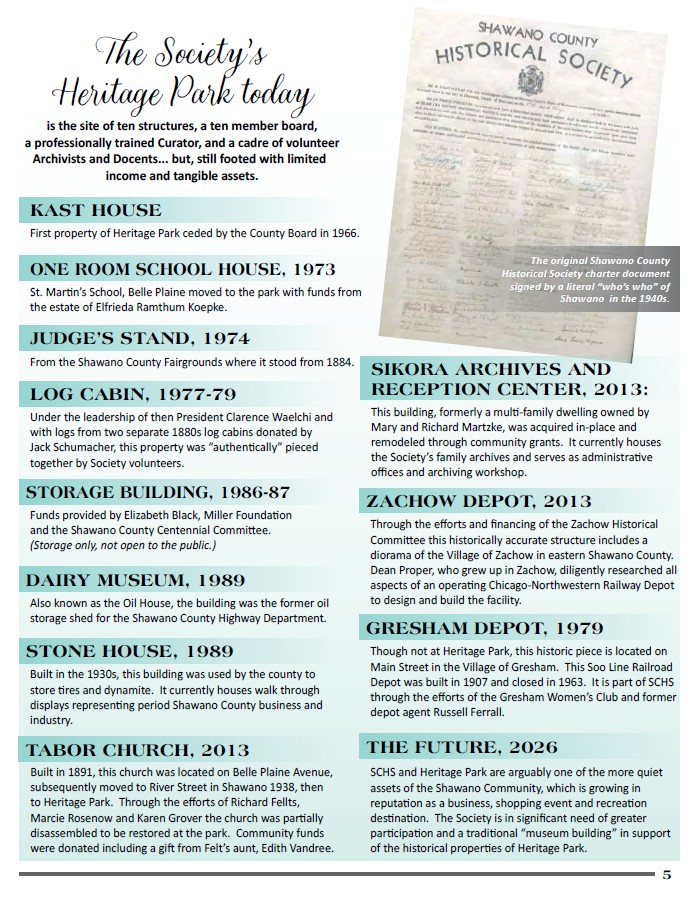
The Society’s Heritage Park Today
The original Shawano County Historical Society charter document signed by a literal “who’s who” of Shawano in the 1940s.
is the site of ten structures, a ten member board, a professionally trained Curator, and a cadre of volunteer Archivists and Docents……….but, still footed with limited income and tangible assets.
KAST HOUSE: First property of Heritage Park ceded by the County Board in 1966.
ONE ROOM SCHOOL HOUSE, 1973: St. Martin’s School, Belle Plaine moved to the park withfunds from the estate of Elfrieda Ramthum Koepke.
JUDGE’S STAND, 1974: From the Shawano County Fairgrounds where it stood from 1884.
LOG CABIN, 1977-79: Under the leadership of then President Clarence Waelchi and with logs from two separate 1880s log cabins donated by Jack Schumacher, this property was “authentically” pieced together by Society volunteers.
STORAGE BUILDING, 1986-87: Funds provided by Elizabeth Black, Miller Foundation and the Shawano County Centennial Committee. (Storage only, not open to the public.)
DAIRY MUSEUM, 1989: Also know as the Oil House, the building was the former oil storage shed for the Shawano County Highway Department.
STONE HOUSE, 1989: Built in the 1930s, this building was used by the county to store tires and dynamite. It currently houses walk through displays representing period Shawano County business and industry.
TABOR CHURCH, 2013: Built in 1891, this church was located on Belle Plaine Avenue, subsequently moved to River Street in Shawano 1938, then to Heritage Park. Through the efforts of Richard Fellts, Marcie Rosenow and Karen Grover the church was partially disassembled to be restored at the park. Community funds were donated including a gift from Felt’s aunt, Edith Vandree.
SIKORA ARCHIVES AND RECEPTION CENTER, 2013: This building, formerly a multi-family dwelling owned by Mary and Richard Martzke, was acquired in-place and remodeled through community grants. It currently houses the Society’s family archives and serves as administrative offices and archiving workshop.
ZACHOW DEPOT, 2013: Through the efforts and financing of the Zachow Historical Committee this historically accurate structure includes a diorama of the Village of Zachow in eastern Shawano County. Dean Proper, who grew up in Zachow, diligently researched all aspects of an operating Chicago-Northwestern Railway Depot to design and build the facility.
GRESHAM DEPOT, 1979: Though not it Heritage Park, this historic piece is located on Main Street in the Village of Gresham. This Soo Line Railroad Depot was built in 1907 and closed in 1963. It is part of SCHS through the efforts of the Gresham Women’s Club and former depot agent Russell Ferrall.
THE FUTURE, 2026: SCHS and Heritage Park are arguably one of the more quiet assets of the Shawano Community, which is growing in reputation as a business, shopping event and recreation destination. The Society is in significant need of greater participation and a traditional “museum building” in support of the historical properties of Heritage Park.
*****************
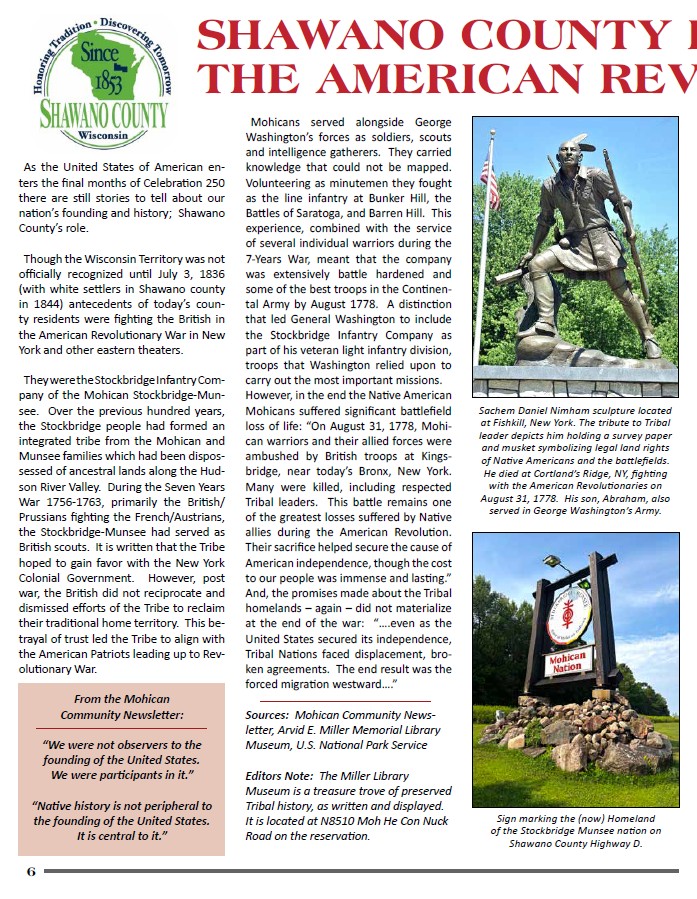
Shawano County People and the American Revolutionary War
As the United States of American enters the final months of Celebration 250 there are still stories to tell about our nation’s founding and history; Shawano County’s role.
Though the Wisconsin Territory was not officially recognized until July 3, 1836 (with white settlers in Shawano county in 1844) antecedents of today’s county residents were fighting the British in the American Revolutionary War in New York and other eastern theaters.
They were the Stockbridge Infantry Company of the Mohican Stockbridge-Munsee. Over the previous hundred years, the Stockbridge people had formed an integrated tribe from the Mohican and Munsee families which had been dispossessed of ancestral lands along the Hudson River Valley. During the Seven Years War 1756-1763, primarily the British/Prussians fighting the French/Austrians, the Stockbridge-Munsee had served as British scouts. It is written that the Tribe hoped to gain favor with the New York Colonial Government. However, post war, the British did not reciprocate and dismissed efforts of the Tribe to reclaim their traditional home territory. This betrayal of trust led the Tribe to align with the American Patriots leading up to Revolutionary War.
From the Mohican Community Newsletter:
“We were not observers to the founding of the United States. We were participants in it.”
“Native history is not peripheral to the founding of the United States. It is central to it.”
Mohicans served alongside George Washington’s forces as soldiers, scouts and intelligence gatherers. They carried knowledge that could not be mapped. Volunteering as minutemen they fought as the line infantry at Bunker Hill, the Battles of Saratoga, and Barren Hill. This experience, combined with the service of several individual warriors during the 7-Years War, meant that the company was extensively battle hardened and some of the best troops in the Continental Army by August 1778. A distinction that led General Washington to include the Stockbridge Infantry Company as part of his veteran light infantry division, troops that Washington relied upon to carry out the most important missions.
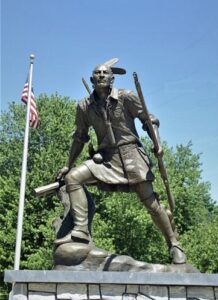
Sachem Daniel Nimham sculpture located at Fishkill, New York. The tribute to Tribal leader depicts him holding a survey paper and musket symbolizing legal land rights of Native Americans and the battlefields. He died at Cortland’s Ridge, NY, fighting with the American Revolutionaries on August 31, 1778. His son, Abraham, also served in George Washington’s Army.
However, in the end the Native American Mohicans suffered significant battlefield loss of life: “On August 31, 1778, Mohican warriors and their allied forces were ambushed by British troops at Kingsbridge, near today’s Bronx, New York. Many were killed, including respected Tribal leaders. This battle remains one of the greatest losses suffered by Native allies during the American Revolution. Their sacrifice helped secure the cause of American independence, though the cost to our people was immense and lasting.” And, the promises made about the Tribal homelands – again – did not materialize at the end of the war: “….even as the United States secured its independence, Tribal Nations face displacement, broken agreements. The end result was the forced migration westward….”
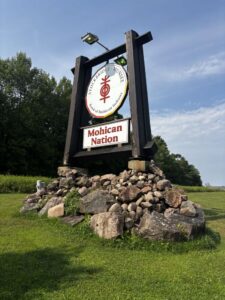
Sign marking the (now) Homeland of the Stockbridge Munsee nation on Shawano County Highway D.
Sources: Mohican Community Newsletter, Arvid E. Miller Memorial Library Museum, U.S. National Park Service
Editors Note: The Miller Library Museum is a treasure trove of preserved Tribal history, as written and displayed. It is located at N8510 Moh He Con Nuck Road on the reservation.
****************
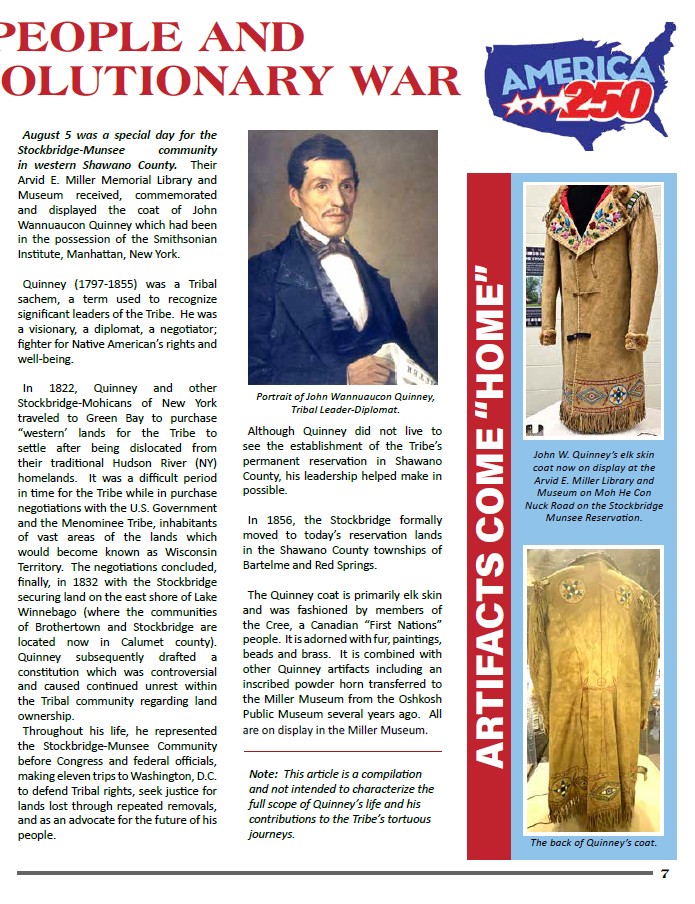
August 5 was a special day for the Stockbridge-Munsee community in western Shawano County. Their Arvid E. Miller Memorial Library and Museum received, commemorated and displayed the coat of John Wannuaucon Quinney which had been in the possession of the Smithsonian Institute, Manhattan, New York.
Quinney (1797-1855) was a Tribal sachem, a term used to recognize significant leaders of the Tribe. He was a visionary, a diplomat, a negotiator; fighter for Native American’s rights and well-being.
In 1822, Quinney and other Stockbridge-Mohicans of New York traveled to Green Bay to purchase “western’ lands for the Tribe to settle after being dislocated from their traditional Hudson River (NY) homelands. It was a difficult period in time for the Tribe while in purchase negotiations with the U.S. Government and the Menominee Tribe, inhabitants of vast areas of the lands which would become known as Wisconsin Territory. The negotiations concluded, finally, in 1832 with the Stockbridge securing land on the east shore of Lake Winnebago (where the communities of Brothertown and Stockbridge are located now in Calumet county). Quinney subsequently drafted a constitution which was controversial and caused continued unrest within the Tribal community regarding land ownership.
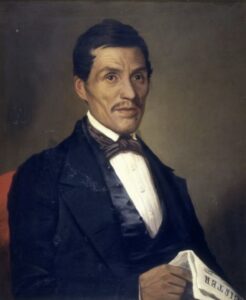
Portrait of John Wannuaucon Quinney, Tribal Leader-Diplomat.
Although Quinney did not live to see the establishment of the Tribe’s permanent reservation in Shawano County, his leadership helped make in possible.
In 1856, the Stockbridge formally moved to today’s reservation lands in the Shawano County townships of Bartelme and Red Springs.
The Quinney coat is primarily elk skin and was fashioned by members of the Cree, a Canadian “First Nations” people. It is adorned with fur, paintings, beads and brass. It is combined with other Quinney artifacts including an inscribed powder horn transferred to the Miller Museum from the Oshkosh Public Museum several years ago. All are on display in the Miller Museum.
Note: This article is a compilation and not intended to characterize the full scope of Quinney’s life and his contributions to the Tribe’s tortuous journeys.
****************
HONORING OUR DEFENDERS
No Headstones program at Woodland Cemetery this year.
Tom Aumann, long time SCHS board member and officer who coordinated the event explained: “Shawano County Historical Society had a successful program the last number of years honoring Shawano County’s deceased military veterans with our Headstones series staged at the Woodland Cemetery. We started with local veterans from the Civil War, then WWI, WWII, Korea and Viet Nam. We are in the planning stages to expand this commemorative series by co-hosting with the Shawano Municipal Airport a unique day of recognition for the veterans of the Army Air Corps and the U.S. Air Force. The program would be at the airport next summer, though a firm date has yet to be determined.”

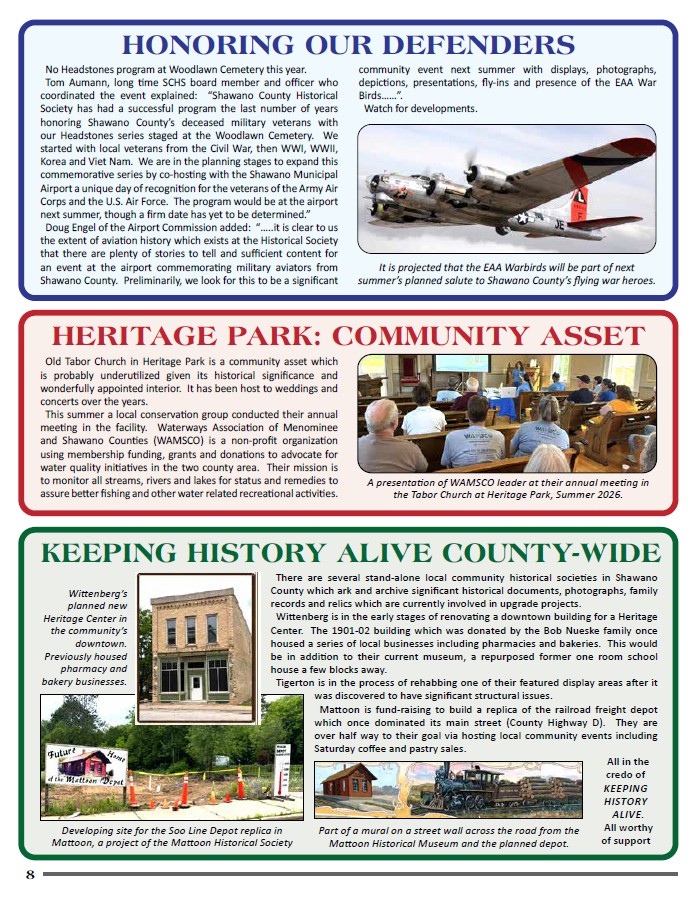
It is projected that the EAA Warbirds will be part of next summer’s salute to Shawano County’s flying war heroes.
Doug Engel of the Airport Commission added: “It is clear to us the extent of aviation history which exists at the Historical Society that there are plenty of stories to tell and sufficient content for an event at the airport commemorating military aviators from Shawano County. Preliminarily, we look for this to be a significant community event next summer with displays, photographs, presentations, fly-ins and the presence of the EAA War Birds…….”
Watch for developments.
****************
HERITAGE PARK: COMMUNITY ASSET
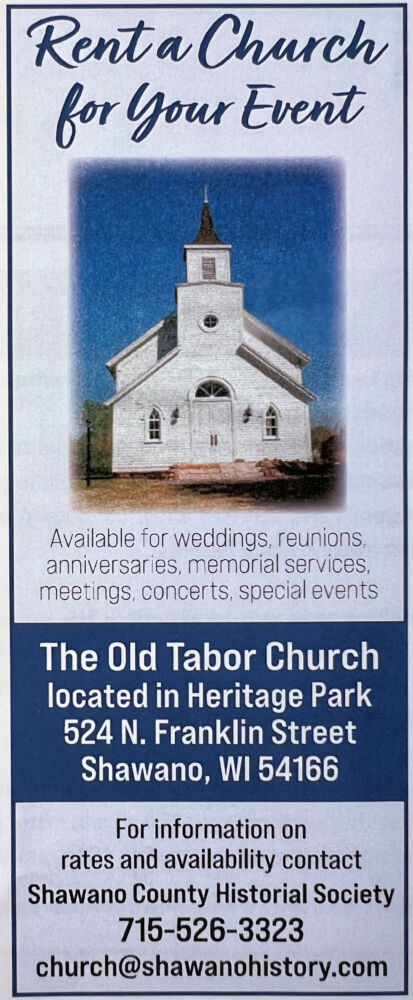
Old Tabor Church in Heritage Park is a community asset which is probably underutilized given its historical significance and wonderfully appointed interior. It has been host to weddings and concerts over the years.
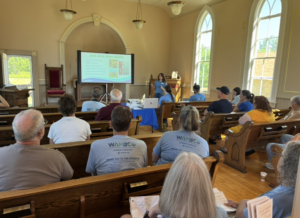
A presentation of WAMSCO leader at their annual meeting in the Tabor Church at Heritage Park, Summer 2026.
This summer a local conservation group conducted their annual meeting in the facility. Waterways Association of Menominee and Shawano Counties (WAMSCO) is a non-profit organization using membership funding, grants and donations to advocate for water quality initiatives in the two county area. Their mission is to monitor all streams, rivers and lakes for status and remedies to assure better fishing and other water related recreational activities.
*****************
KEEPING HISTORY ALIVE COUNTY-WIDE
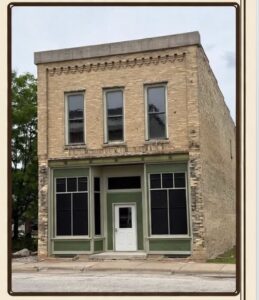
Wittenberg’s planned new Heritage Center in the community’s downtown. Previously housed pharmacy and bakery businesses.
There are several stand-alone local community historical societies in Shawano County which ark and archive significant historical documents, photographs, family records and relics which are currently involved in upgrade projects.
Wittenberg is in the early stages of renovating a downtown building for a Heritage Center. The 1901-02 building which was donated by the Bob Nueske family once housed a series of local businesses including pharmacies and bakeries. This would be in addition to their current museum, a repurposed former one room school house a few blocks away.
Tigerton is in the process of rehabbing one of their featured display areas after it was discovered to have significant structural issues.
Mattoon is fund-raising to build a replica of the railroad freight depot which once dominated its main street (County Highway D). They are over half way to their goal via hosting local community events including Saturday coffee and pastry sales.
Wittenberg’s planned new Heritage Center in the community’s downtown. Previously housed pharmacy and bakery businesses.
Developing site for the Soo Line Depot replica in Mattoon, a project of the Mattoon Historical Society.
Part of a mural on a street wall across the road from the Mattoon Historical Museum and the planned depot.
All in the credo of KEEPING HISTORY ALIVE. All worthy of support.
*****************
Rhubarb Fest 2026
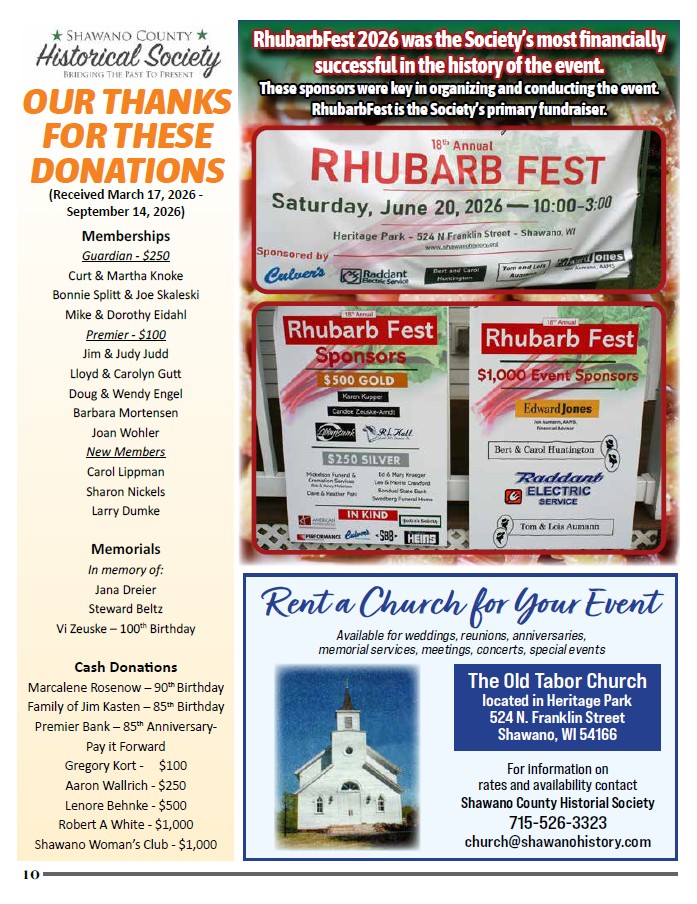
Rhubarb Fest 2026 was the Society’s most financially successful in the history of the event.
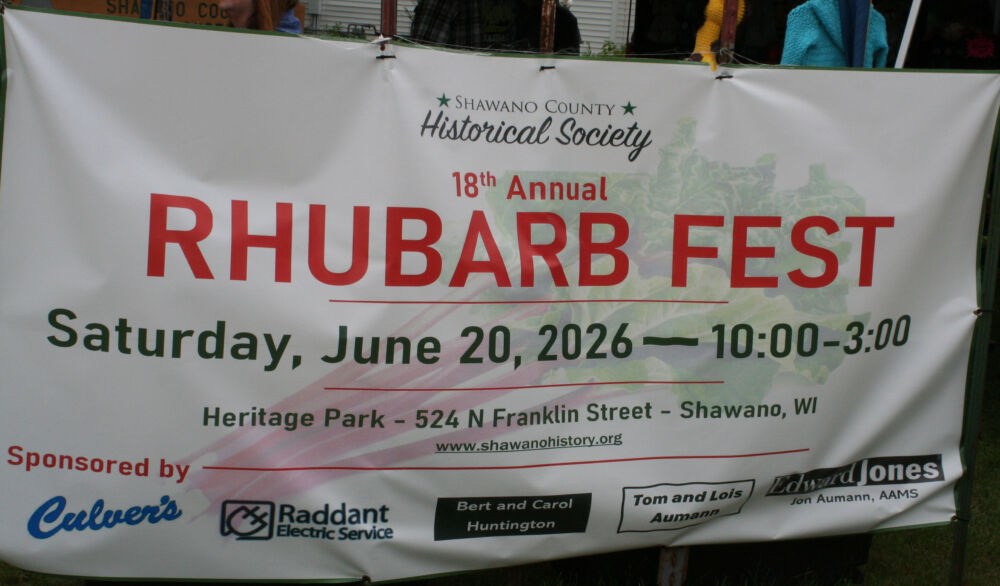
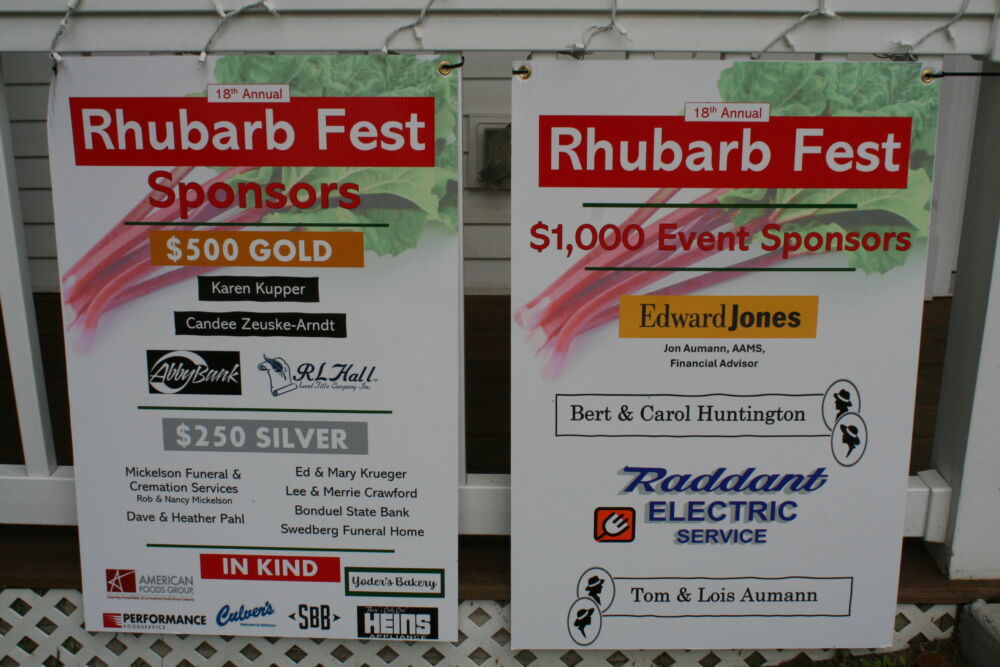
These sponsors were key in organizing the Society’s primary fundraiser.
*****************
Rhubarb Fest 2026 Photos
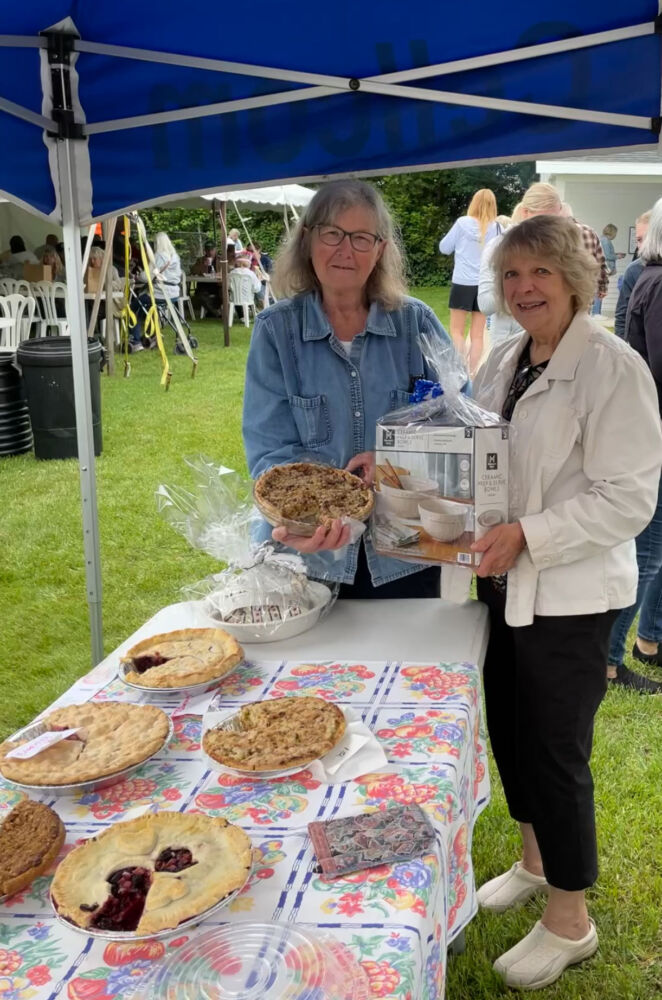
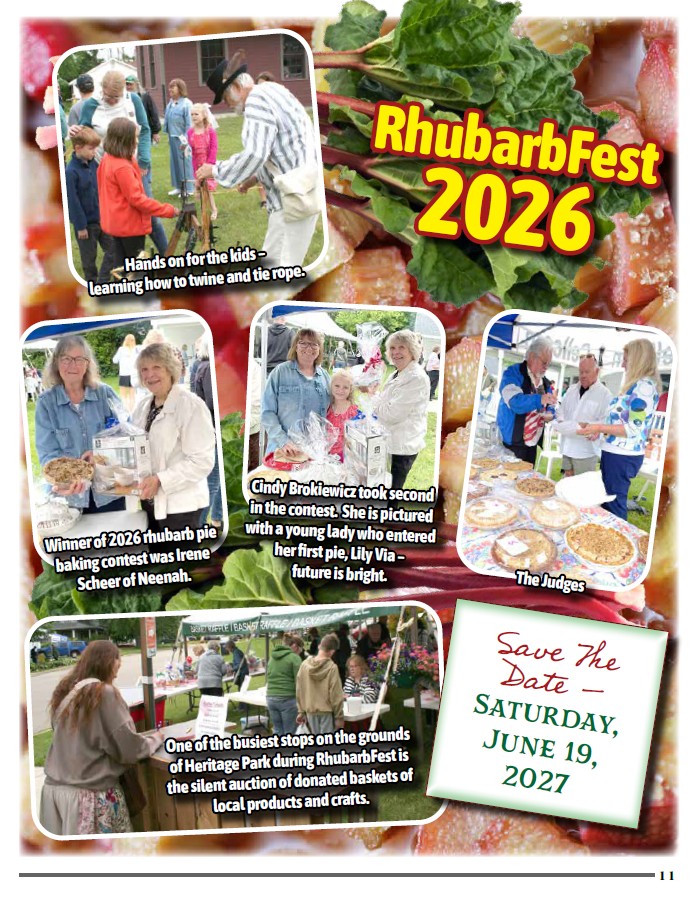
Winner of 2026 rhubarb pie baking contest was Irene Scheer of Neenah.
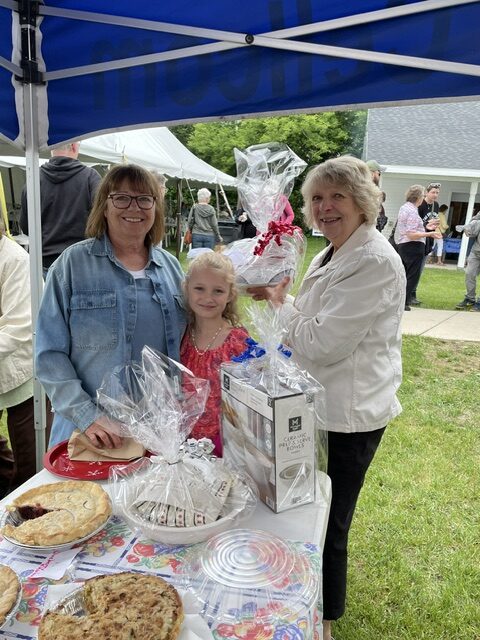
Cindy Brokiewicz took second in the contest. She is pictured with a young lady who entered her first pie, Lily Via – future is bright.
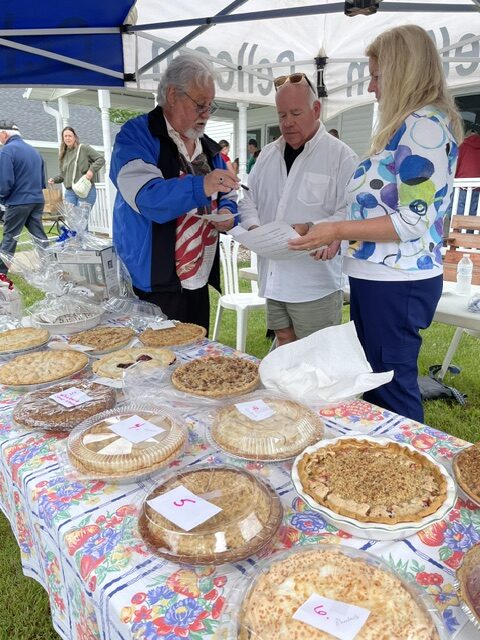
The judges
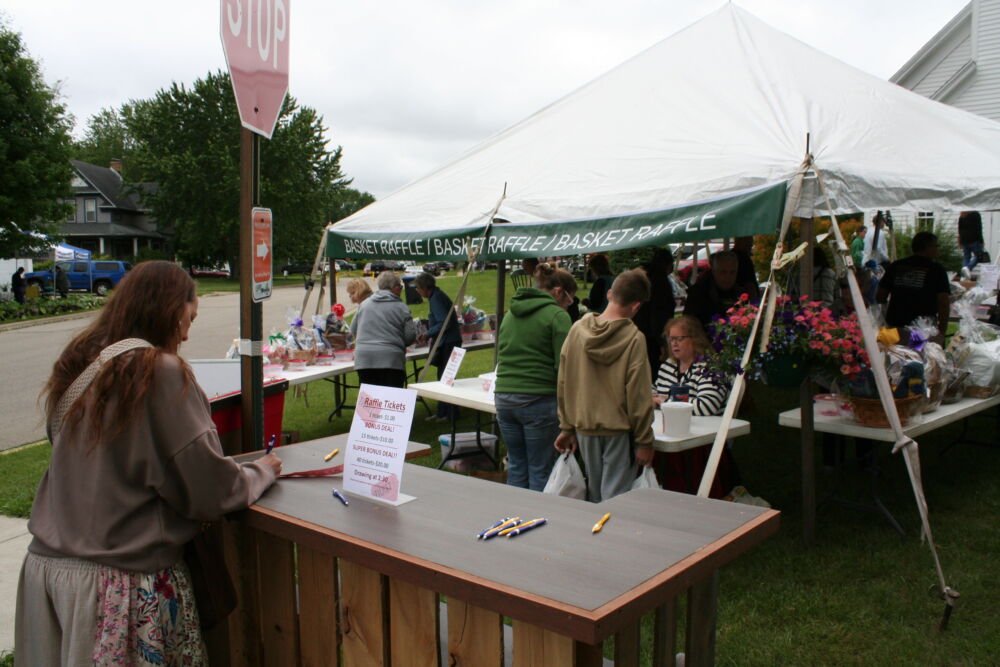
One of the busiest stops on the grounds of Heritage Park during RhubarbFest is the silent auction of donated baskets of local products and crafts.
Save The Date – Saturday June 19, 2027
*****************
Our Thanks for These Donations
Received March 17, 2026 – September 14, 2026
Memberships
Lifetime – $1,250
Guardian – $250
Curt & Martha Knoke
Bonnie Splitt & Joe Skaleski
Mike & Dorothy Eidahl
Premier – $100
Jim & Judy Judd
Lloyd & Carolyn Gutt
Doug & Wendy Engel
Barbara Mortensen
Joan Wohler
New Members
Carol Lippman
Sharon Nickels
Larry Dumke
Memorials
In memory of:
Jana Dreier
Steward Beltz
Vi Zeuske – 100th Birthday
Cash Donations
Marcalene Rosenow – 90th Birthday
Family of Jim Kasten – 85th Birthday
Premier Bank – 85th Anniversary-Pay it Forward
Gregory Kort – $100
Aaron Wallrich – $250
Lenore Behnke – $500
Robert A White – $1,000
Shawano Woman’s Club – $1,000
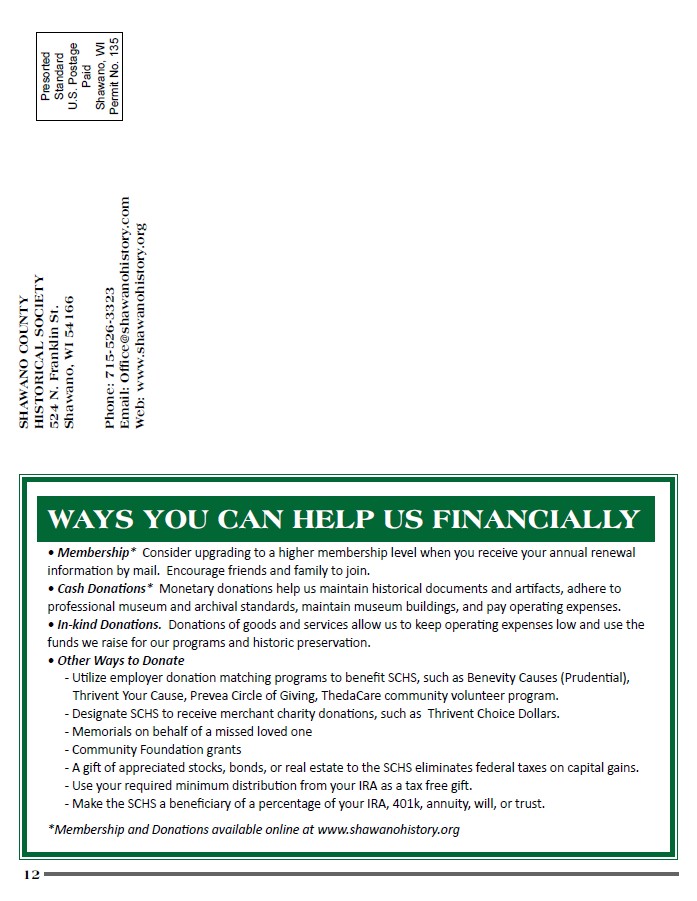
WAYS YOU CAN HELP US FINANCIALLY
- Membership* Consider upgrading to a higher membership level when you receive your annual renewal information by mail. Encourage friends and family to join.
- Cash Donations* Monetary donations help us maintain historical documents and artifacts, adhere to professional museum and archival standards, maintain museum buildings, and pay operating expenses.
- In-kind Donations. Donations of goods and services allow us to keep operating expenses low and use the funds we raise for our programs and historic preservation.
- Other Ways to Donate
- Utilize employer donation matching programs to benefit SCHS, such as Benevity Causes (Prudential), Thrivent Your Cause, Prevea Circle of Giving, ThedaCare community volunteer program.
- Designate SCHS to receive merchant charity donations, such as Thrivent Choice Dollars.
- Memorials on behalf of a missed loved one
- Community Foundation grants
- A gift of appreciated stocks, bonds, or real estate to the SCHS eliminates federal taxes on capital gains.
- Use your required minimum distribution from your IRA as a tax free gift.
- Make the SCHS a beneficiary of a percentage of your IRA, 401k, annuity, will, or trust.
*Membership and Donations available online at www.shawanohistory.org
*****************